
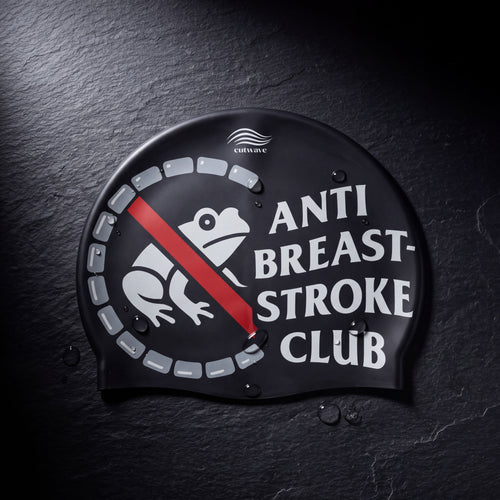
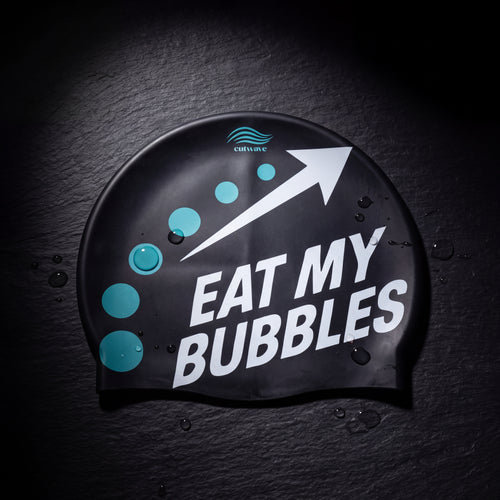


Open water swimming changes the job of a swim cap. In a lane you wear one mostly to keep hair contained and reduce drag. In a lake, river, or sea you also need other swimmers, kayakers, and safety boats to spot you. A bright, close-fitting silicone cap does both jobs well.
The best swim cap for most open water swimming is a snug, brightly coloured silicone cap that stays put and is easy to see. Silicone is the practical default: it fits close, holds hair out of the way, and takes bright printed designs. For genuinely cold water, a neoprene cap insulates better — but it is a different tool, not a better silicone cap.
Why visibility comes first
In open water there are no lane ropes or black lines to follow. Bright, high-contrast designs make you easier to track from a kayak, a support boat, or the shore. A plain dark cap disappears quickly against open water and low light. Choose a cap with bold colour or a clear printed design, and match it with a brightly coloured tow float and goggles strap when you can.
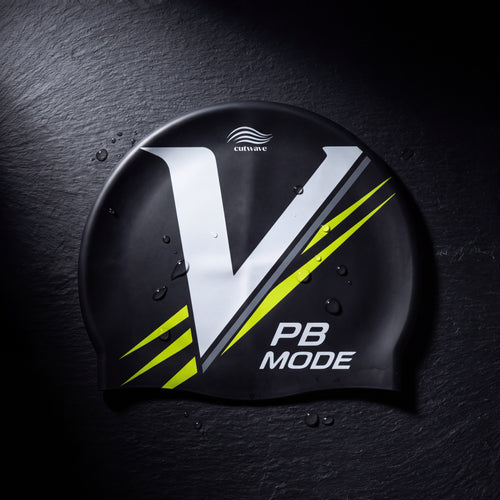
CutWave's designs are built for this: the PB Mode swim cap pairs a black base with a white V and lime stripes, and the Chlorine Addict Water Drop adds a bold printed panel. Both are 100% premium silicone and designed in Austria.
Silicone vs latex vs neoprene for open water
Silicone fits close, holds hair well, and takes bright printed designs. It is the right all-round choice for training and most event swims. Latex is thinner and cheaper but grips hair more. Neoprene is the one material with real insulation: it adds warmth in cold water but also bulk and drag. If you regularly swim in cold lakes through the shoulder seasons, neoprene is worth considering as an extra layer; for most swimmers, a silicone cap is the standard.
For a deeper look at the materials, read our silicone vs latex vs lycra guide.
Fit: keep it snug without fighting it
An open water cap needs to stay put for longer sessions and through sighting turns. Stretch it open with both hands, settle the front on your forehead, and pull the back down over your crown. A cap that fits should feel close but not painful, and it should sit clear of your goggles strap. Work through the slipping-cap fixes if it keeps riding up.
The two-cap trick for colder swims
Swimmers often wear two caps for warmth and to lock goggles in place: a first cap to hold the goggles straps, then a second over the top. It adds a little warmth without switching materials. Our double-cap explainer covers when and how it helps.
Care after salt, lake, and river swims
Rinse your cap in fresh water after every open water swim, then let it air-dry flat out of direct sunlight. Salt and lake water dry silicone out faster than pool water. Follow the same routine in our swim cap size and care guide.
Common questions
Do silicone swim caps keep your head warm in open water?
Only a little. Silicone keeps hair out of the way and adds a thin layer, but it is not insulation. If cold is the main problem, a neoprene cap or a second cap is the better answer.
Which colour is best for open water?
Bright or high-contrast designs — white, lime, or a bold printed panel — stand out against open water. A plain dark cap is harder to see.
Can I use the same cap in the pool and open water?
Yes. A snug silicone cap works for both. Just rinse it in fresh water after a lake or sea swim, because salt and lake water are harsher on the material than pool water.
If you are choosing a cap for open water, browse our premium silicone swim caps. Every design is 100% premium silicone and designed in Austria, with free EU shipping from €24.99.