



Braids, curls, and textured hair behave differently in the pool than straight hair does. A swim cap has to do two jobs at once: keep the hair contained without tugging on it, and keep pool water from soaking into every strand. The material you choose matters more than the design, and silicone is the gentlest place to start.
To protect braids, curls, and textured hair in the pool, choose a stretchy silicone swim cap, wet the hair with clean water first, gather it into a low bun or flat braids, and pull the cap on from front to back. Silicone stretches more than latex and grips the hair far less, which is why most swimmers with thicker or longer textured hair find it the most comfortable material.
Why silicone beats latex for textured hair
Silicone and latex are two different materials. Latex is thin and very elastic, but it also grips hair tightly and is a common source of that snagging feeling when you take a cap off. Silicone is thicker, softer, and more forgiving: it stretches over a bun or braids without the same grab, and it slides off more easily at the end of a swim. For the full material breakdown, see our guide to choosing between silicone, latex, and lycra.
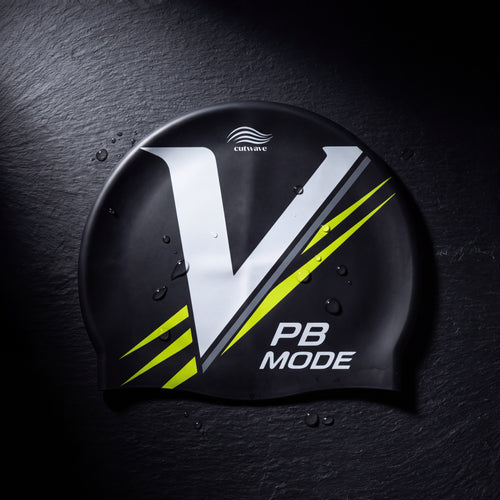
That difference is exactly why a premium silicone cap such as the PB Mode swim cap is the more comfortable choice for braids and curls. Every CutWave cap is made from 100% premium silicone and designed in Austria.
Prep your hair before you swim
The single most useful step happens before you touch a cap. Wet your hair with clean water and, if your routine allows, work in a little leave-in conditioner or oil. Hair that is already saturated with clean water absorbs less chlorinated pool water. For braids and protective styles this step matters even more, because the style can hold water against the scalp for longer.
Gather the hair low and flat rather than high on the crown. A low bun or two flat braids sit closer to the head, which makes the cap easier to pull over without snagging. A high, bulky bun fights against the cap and leaves gaps where water can creep in.
Putting the cap on without pulling
Open the cap wide with both hands, place the front edge on your forehead, and roll it back over the crown and down to the nape of your neck. Then tuck any loose ends in around the edges with your fingertips. Work slowly rather than forcing it in one quick pull, which is where the tugging happens. This is the same technique we walk through in our guide to putting on a swim cap without the struggle.
What a cap will and will not do
Be realistic about the payoff. A swim cap holds your hair out of the way and keeps the worst of the chlorine off it, but no silicone cap seals the water out completely. Expect your hair to be damp at the roots when you take the cap off, and plan to rinse with clean water and re-moisturise afterwards. That honest expectation is the difference between a cap you keep in your bag and one you stop using after two sessions.
Choosing a fit
One size is the norm for adult silicone caps, and the stretch is what does the work. If you have a lot of hair, look for a cap with a comfortable amount of give and pair it with a lower style rather than sizing up to a cap that is loose. A loose cap lets water in and slides more, not less. For a few designs worth comparing, browse the full CutWave swim cap collection.
Quick answers
Is silicone or latex better for braids? Silicone is generally the gentler choice: it stretches more and grips hair less than latex.
Should I wet my hair before putting on a swim cap? Yes. Hair that is already wet with clean water absorbs less chlorinated pool water.
Will a swim cap keep my braids dry? No cap seals water out completely. Expect dampness at the roots and rinse with clean water afterwards.
How should I wear braids under a swim cap? Gather them low and flat, such as a low bun or flat braids, so the cap covers them without snagging.