
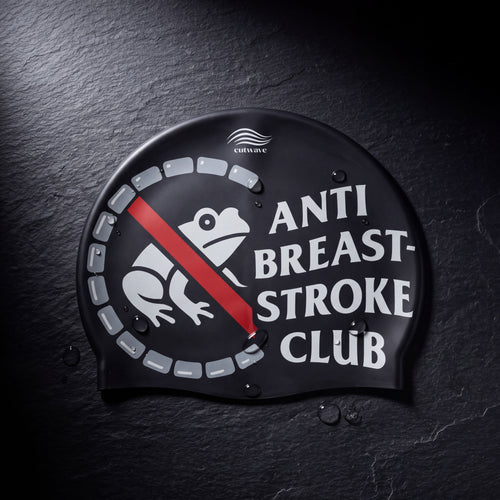

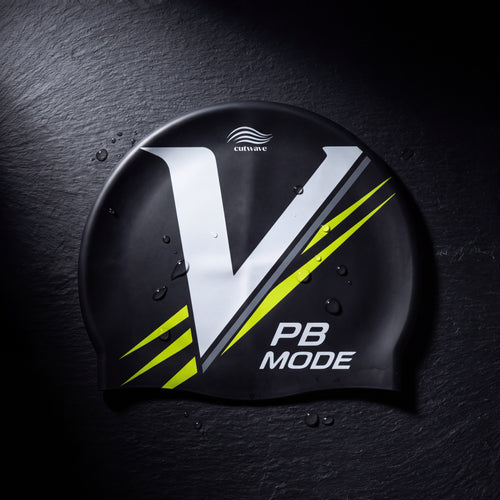


Most adult silicone swim caps use one stretch size rather than a ladder of numbered sizes. Caps also vary by material and construction. For a full sizing and care reference, see our swim cap size and care guide.
Every CutWave cap is 100% premium silicone in one adult stretch size, unisex. Below we cover whether swim caps come in sizes, how a silicone cap should feel, and what to do with long hair, smaller heads, or children.
Quick answer: what size swim cap do I need
- Most adults: CutWave uses one adult stretch silicone size. Use the fit signs below to check it.
- Long or thick hair: start with the adult stretch size and pay close attention to hair placement and application. See the section on long hair below.
- Children: a small child is usually better served by a dedicated junior cap, since adult one-size caps are built for adult head circumferences.
- Unusually large heads: a stretch cap covers most large adults, but if you already know standard caps feel tight, that is worth noting before you buy.
If you want to browse designs while you decide, the full range lives in the all caps collection.
Do swim caps come in different sizes?
Swim caps vary by material and construction, and some styles also use numbered sizes. The common types are silicone, latex, lycra or fabric, and neoprene. Each behaves differently:
- Silicone: smooth and elastic, with adult styles often using one stretch size across a range of heads.
- Latex: thinner and stretchy; swimmers with a latex allergy should choose another material.
- Lycra or fabric: comfortable and often sold in S/M/L, but not fully waterproof, so it does not keep hair dry the way silicone does.
- Neoprene: thick and warm for open water, usually sized and chin-strapped, which is a different category entirely.
So while some fabric caps come in small, medium, and large, a quality silicone cap leans on elasticity instead. The stretch is the sizing system.
Are swim caps one size fits all?
One size fits most is more accurate than one size fits all. Adult stretch caps are made to cover a range of adult head shapes. Fit still varies with head shape, hair volume, and application, so use the signs below rather than relying on a universal measurement.
A toddler or young child has a much smaller head and is better off in a junior-specific cap. Some adults with very large heads may find a standard cap snug. Use a product's fit guidance when your head or hair volume is outside the usual range.
How should a swim cap fit?
A silicone swim cap should feel snug and secure without being painful. The goal is even, gentle pressure all the way around, not a vice grip on your forehead. Use these signs to judge the fit:
- Snug, not squeezing: it should hold firmly but never give you a headache or leave deep red marks after a short swim.
- Covers the hairline: the front edge should sit just above your eyebrows and cover your hairline, with your ears either fully in or fully out depending on preference.
- No rolling at the edges: the rim should lie flat against your skin. If it creeps or rolls up at the back or sides, the cap is not seated correctly or is being stretched unevenly.
- Movement check: a few strokes can reveal whether the cap is shifting from the forehead or edges.
If your cap keeps sliding, check application, hair placement, and material as well as size. We break that down in our guide on why swim caps slip and how to fix it.
Swim cap fit for long hair
Long hair changes how you put a cap on far more than it changes the size you need. The same adult stretch size may work with long hair. Preparation and hair placement affect the fit as much as the size.
- Wet your hair lightly before capping; damp hair tucks in more smoothly than dry hair.
- Tie long hair into a low bun or ponytail so the bulk sits at the nape of your neck, inside the back of the cap.
- Pull the cap from front to back, then tuck loose strands up under the rim with your fingers.
- Consider a leave-in conditioner for extra protection, since no cap is fully watertight.
If hair protection is your main concern, we go deeper into materials and routines in the best swim cap material for long hair.
Swim cap fit for kids versus adults
The single biggest sizing distinction in swim caps is adult versus junior, not a string of numbered adult sizes. Adult one-size caps, including ours, are built around adult head circumferences. They will be too loose and prone to slipping on a small child.
- Young children: choose a junior or child-specific cap sized for smaller heads.
- Older children and teens: many tweens and teens with near-adult head sizes wear adult caps comfortably; if a teen has been fitting into adult hats and helmets, an adult stretch cap is usually fine.
- Adults of all builds: one adult stretch size is the standard, and it is what you get with every CutWave cap.
How to put on a swim cap for the best fit
Application affects how a cap feels. Use this technique to check the fit:
- If your hair is long, tie it back first and lightly dampen it.
- Hold the cap with both hands, fingers inside, thumbs outside, and open it wide.
- Place the front edge against your forehead just above your eyebrows.
- Stretch the cap up and over the back of your head in one smooth motion.
- Run a finger around the rim to release any pinched skin and tuck in stray hair.
- Check the back is not rolled; a flat, even rim gives you a more consistent fit.
Signs a swim cap is the wrong size
Fit problems usually announce themselves clearly. Watch for these:
- Too tight: persistent headaches, throbbing at the temples, or deep marks that linger long after you remove it.
- Too loose: the cap slides back off your forehead, wrinkles badly, or fills with water as you swim.
- Rolling edges: a rim that constantly creeps up at the back often signals the cap is too small for your head or simply seated wrong.
- Constant readjustment: if you are fixing it every few lengths, something about the fit or the application is off.
Use these signs to decide whether to change your application, hair placement, or cap size. Persistent pressure or movement is a reason to consult the product's fit guidance.
Care so your cap keeps its fit
Care helps maintain the cap's surface and fit. Chlorine, heat, and friction are reasons to rinse, dry, and store it carefully.
- Rinse the cap in cool fresh water after every swim to wash off chlorine and salt.
- Let it air dry fully, inside out, away from direct sun and radiators.
- Dust the inside with a little talc occasionally to stop the silicone sticking to itself.
- Store it flat or loosely folded, never stretched over a sharp edge or balled up in a wet bag.
The full routine, including a printable fit and care checklist, is on our swim cap size and care guide. If you are buying for two, or want a spare in rotation so each cap gets longer to dry, the Duo Pack covers it.
FAQ
Do swim caps come in different sizes?
They vary more by material than by numbered sizes. Fabric and lycra caps are sometimes sold in small, medium, and large, while silicone caps typically come in one adult stretch size that fits most heads, plus separate junior sizes for children. CutWave caps are one adult stretch size in premium silicone.
Are swim caps one size fits all?
One size fits most is the useful framing. A stretch silicone cap covers a range of adult heads, while very young children need a junior cap and some adults with unusually large heads may need another size or style.
How tight should a swim cap be?
Snug and secure, never painful. You want even, gentle pressure around your whole head, a front edge that sits just above your eyebrows, and a rim that lies flat without rolling. If it causes headaches or leaves deep lasting marks, it is too tight; if it slides off your forehead, it is too loose or not put on correctly.
What size swim cap should I get for a child?
For a young child, choose a junior or child-specific cap for smaller heads. Older children and teens whose heads are close to adult size may be able to wear an adult stretch cap; check the fit before swimming.
How do I keep my swim cap from rolling up at the edges?
Seat the cap properly: pull it from front to back in one motion, then run a finger around the rim so it lies flat against your skin. Rolling can come from uneven application, hair placement, or size.