




In competition and club training, a swim cap is part of the kit. It holds loose hair under a surface, keeps it out of the face, and gives you one less piece of equipment to adjust. This guide covers what to look for in a swim cap for competition and club training, with realistic expectations about what a cap can do.
The key points
- Silicone is a common choice: For regular lap and competition training, a flexible silicone cap is easy to care for and position.
- Fit comes first: A cap that moves can cost concentration. Check the size and fitting technique before blaming the material.
- Keep the cap in perspective: Treat it as part of your kit for hair and setup, alongside your normal training.
- Two caps as a method: Many competition swimmers wear two caps to hold their goggles between them. More on that below.
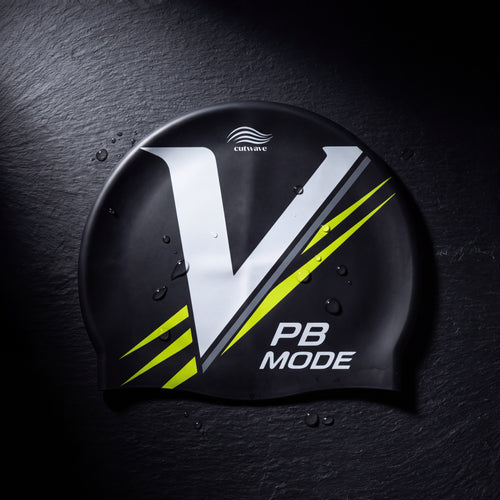
- Personality is allowed: A statement design such as PB Mode adds character to club training.
What a competition swim cap does
A swim cap is part of the kit, not a substitute for training. It can hold loose hair under a smooth surface and keep it out of the face. Hair under a cap also has less direct exposure to pool water, although water can still enter around the edges.
- Hair stays contained: Loose strands are less likely to sit in your field of vision.
- Pool water has less direct access: A cap covers most of the hair, but it is not a watertight seal.
- Fewer setup distractions: A cap fitted before the start leaves less to adjust once you are in the lane.
What to look for in competition and club training
For serious training and competition, use this short checklist:
- Material: Silicone is a flexible, latex-free option for regular training. Details are in the Swim Cap Material Guide: Silicone, Latex, and Lycra.
- Fit: The cap should feel firm but not painful. If it moves, check size and fitting technique; see Swim Cap Keeps Slipping?.
- Size: Silicone stretches and many adults use a standard adult size. If in doubt, use the Swim Cap Size Guide.
- Putting it on: Before a start, use the two-hand method in How to Put On a Swim Cap.
- Carry a spare: A second cap in your bag is useful for competitions. Any piece of kit can need replacing.
The two-cap method in competition
A classic competition setup is two caps on top of each other. The first cap holds the hair, the goggles sit over it, and a second cap covers the goggle straps. This can help keep the goggles from shifting during a dive. Try the setup in training before using it at an event. If you want a second cap ready to go, the Duo Pack gives you two designs for EUR 27.99 and saves EUR 1.99.
Which CutWave cap suits your competition style?
CutWave caps pair practical kit with personality:
- For the personal-best chaser: The PB Mode cap has a distinctive V design for swimmers who chase personal bests.
- For the club humourist: A statement design adds personality to team training.
- For swimmers who like to switch: The Duo Pack gives you a training cap and a second design, or a spare.
Browse all designs in the swim cap collection.
What a cap cannot do
A cap will not solve fit or technique issues, and it will not keep hair completely dry. A suitable cap holds hair out of the face and can reduce setup distractions. That is the practical role of the cap in competition.
The practical competition and club-training takeaway
Choose a cap that fits well, is made from 100% premium silicone, and does not distract you. CutWave caps are designed for adults and designed in Austria. Browse the collection, use the Duo Pack for two designs and EUR 1.99 savings, or see the Swim Caps & Silicone Swim Caps page.
Frequently Asked Questions
Does a swim cap make you faster in competition?
No. A cap can hold hair out of the face and reduce setup distractions, but race times come from training and technique.
Which material is best for competition and club training?
Silicone is a flexible, latex-free option for regular lap and competition training. Fit and personal comfort still matter.
Why do competition swimmers wear two caps?
The two-cap method can help hold the goggle straps between the caps. The first cap holds the hair, the goggles sit over it, and a second cap covers the straps. Try the setup in training first.
How can I stop the cap from moving in competition?
Use a suitable size and fit the cap evenly from front to back. No cap can guarantee that it will never move, so check the fitting technique in training.
Do I need a special swim cap for club training?
No specialist cap is required. Choose one that fits well, is made from 100% premium silicone, and suits your training routine. A statement design can add personality to team training.