


Long hair and chlorinated water are not a great combination. The right swim cap for long hair can be the difference between a relaxed session and twenty minutes of detangling afterward. This guide covers material, size, fit, hair care, and the limits of a cap.
Why long hair needs its own strategy
Short hair generally leaves more room under a cap. Long hair takes up space, can shift the cap backward while you swim, and is more exposed to pool water around the edges. A useful setup therefore needs room for the hair, a comfortable fit, and a way to keep the hair together under the cap.
No ordinary swim cap is completely waterproof. It can keep hair more contained and reduce direct contact with pool water, but some dampness is normal.
Which material works for long hair?
Silicone for regular training
Silicone is flexible and has a smooth surface. For long hair, that can make the cap easier to position. CutWave caps are made from 100% premium silicone, a practical material for frequent swimmers.
Latex for a lower-cost option
Latex is thin and light and can feel more grabby when stretched over hair. It can suit occasional swimming, but check the cap regularly for wear and avoid it if you need to avoid latex. The guide Do Swim Caps Protect Hair from Chlorine? explains what a cap can and cannot do around pool water. For a broader comparison, see the Swim Cap Material Guide: Silicone, Latex, and Lycra.
Lycra or fabric for comfort
Fabric caps can feel soft around hair but let water through more readily. They can work as a comfort layer, though they are a different choice from a cap with a water-resistant surface.
The right size and fit
A cap that is too small can press, while one that is too large can move. With long hair, enough room matters so tied-back hair has somewhere to go. If you are unsure which size fits, see the Swim Cap Size Guide.
This is a practical way to fit a cap over long hair:
- Tie the hair loosely into a flat, low ponytail or bun at the nape of the neck, not high on the head.
- Stretch the cap with both hands and roll it over the head from the forehead backward.
- Gently tuck loose strands under the edge of the cap.
- Run around the edge once more so it lies flat against the skin.
If the cap still moves backward, the Swim Cap Keeps Slipping? guide can help. No cap can guarantee that it will never move, but a flat hairstyle, suitable size, and careful placement can help limit movement.
Hair care around swimming
The cap is one part of the routine. Wet long hair with clean water before swimming. Saturated hair takes up less chlorinated water. Rinse it thoroughly after training so pool water does not sit in the hair.
Which CutWave cap works for long hair?
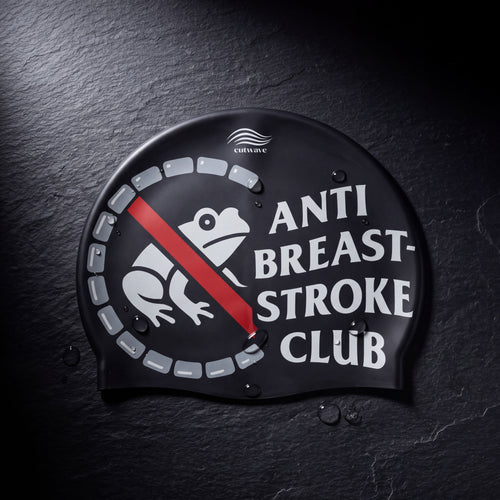
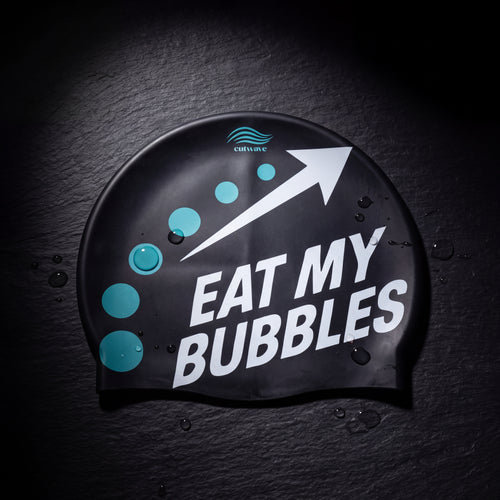
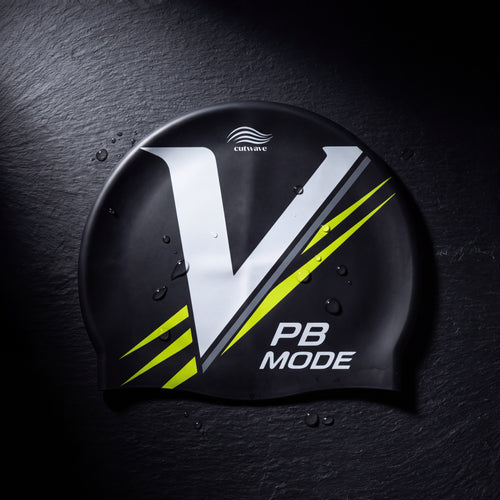
All CutWave models are made from 100% premium silicone, so the choice is mainly about design. Browse the swim cap collection; the overview page is Swim Caps & Silicone Swim Caps.
If you want several designs or swim with someone else, the Duo Pack lets you choose any two caps for EUR 27.99 and save EUR 1.99. CutWave caps are designed in Austria and shipped across the EU, with free EU shipping over EUR 24.99.
Frequently Asked Questions
Does a swim cap keep long hair dry?
No, not completely. No ordinary swim cap is fully waterproof. It keeps hair more contained and can reduce direct contact with pool water, but some dampness is normal.
Is silicone or latex better for long hair?
For regular swimming, silicone is a practical starting point for many long-haired swimmers because it is flexible and has a smooth surface. Size and how you arrange the hair still matter.
How can I stop a cap from slipping with long hair?
Tie the hair flat and low at the nape, roll the cap from front to back, and tuck loose strands under the edge. A suitable size and careful placement can help limit movement, although no cap can eliminate it entirely.
Do I need a special cap for long hair?
You do not necessarily need a separate specialist cap. Enough room, a suitable size, and a flexible silicone cap make a practical combination for many swimmers with long hair.
Does a swim cap protect hair from chlorine?
It reduces direct contact with chlorinated water, but it does not replace hair care. Wet the hair with clean water first and rinse thoroughly after swimming.