

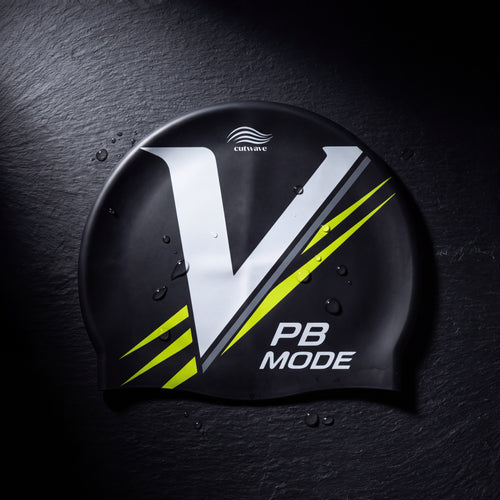


Textured hair asks more of a swim cap than straight hair does. There is more volume to fit in, edges that break easily, and a style you spent hours on that you would like to survive more than one swim.
To protect braids, curls and textured hair in the pool, soak and moisturise your hair before you swim, set it low and flat, use a silicone cap with enough room to cover the style without strain, and rinse and re-moisturise straight afterwards. The cap limits how much pool water gets in and how much your hair moves. It will not keep textured hair dry, so the routine around the cap does half the work.
Why textured hair needs its own plan
Curly and coily hair tends to be drier than straight hair, because the scalp's natural oils travel down a curl more slowly. Pool water makes that worse, and the lengths and ends feel it first. On top of that:
- Volume. An afro, a braid-out or a head of box braids takes up far more room than a ponytail. A cap stretched to its limit pulls hard on the hairline.
- Edges. The fine hair at the temples and nape is the most fragile hair on your head, and it is exactly where the rim sits.
- Styles hold water. Braids, twists and locs soak up water and hold it for hours, so what happens after the swim matters as much as the cap.
For the mechanics of breakage in general, see our guide on whether swim caps damage your hair. This page is about getting your particular style through the pool in good shape.
Match the plan to your style
| Style | Before the cap | Cap tip | After the swim |
|---|---|---|---|
| Box or knotless braids | Rinse the scalp, leave-in on the lengths, fold into a low bun | Long braids may need a larger cap; tuck the ends in last | Squeeze each section in a towel and dry the roots fully |
| Cornrows and flat twists | Light oil along the parts | Sits flat, so a standard cap usually covers it | Rinse the scalp between the rows |
| Locs | Rinse, then coil into a low, flat bun | Long or thick locs need room; never force a small cap | Dry thoroughly, right to the centre of each loc |
| Wash-and-go curls | Saturate with water and conditioner | Cap goes on over wet, conditioned hair | Rinse, re-condition, reapply your styler |
| Loose coily hair or an afro | Leave-in, then two or four chunky twists | Twists pack down smaller than a puff | Condition and detangle with fingers first |
| Silk press or blow-out | Swim near the end of the style's life | Expect some reversion; water reaches the edges | Book the swim before wash day, not after |
Before the swim: the changing-room routine
- Soak your hair with clean water in the shower. Hair that is already full of clean water takes up less pool water.
- Seal in a leave-in or a little oil on the lengths and ends, if your pool allows products. The slip also helps the cap slide on.
- Set the style low and flat. A low bun at the nape, two flat twists or folded braids. A high puff pushes the cap off the back of your head.
- Lay your edges down gently. A thick layer of gel or edge control under the rim can make the cap slide, and then it drags on the very hair you were protecting.
- Consider a thin fabric cap underneath. A Lycra or fabric cap under the silicone one puts a soft layer between your hair and the silicone and holds bulky styles together. Racers use two caps for different reasons, explained in why swimmers wear two caps, but the setup works for textured hair too.
Getting the cap over volume without wrecking your edges
Most edge damage happens during the stretch, when a cap pulled hard over a big style drags across the hairline.
- Put both hands inside the cap and stretch it wide before it touches your head.
- Anchor the front edge on your forehead, just at the hairline, then roll it back over the style. Never start at the back and drag forward.
- Work the lower back in last, feeding sections under the rim with your fingertips rather than forcing the cap down.
- Big styles are a two-person job. Ask your lane mate to hold the front edge while you feed the back over.
The step-by-step technique is in our guide to putting on a swim cap without the struggle. Removal is the mirror image: loosen the nape first, thumbs under, lift up and back, as described in taking off a swim cap without pulling your hair.
After the swim: rinse, dry and reset
Rinse first, every time. Get clean water through the hair straight after the swim, including the scalp between braids and the middle of locs. Do not leave pool water sitting in the hair until you get home. The wider chlorine routine is covered in how chlorine affects your hair.
Curls and coils: condition, detangle with fingers or a wide-tooth comb while the conditioner is in, then reapply leave-in and styler. If you swim several times a week, a full shampoo every session usually strips too much. Many swimmers alternate a gentle cleanse with a conditioner-only rinse and add a weekly deep condition.
Braids and twists: squeeze the water out section by section with a microfibre towel or an old cotton T-shirt. Rubbing frizzes the braid. Pay attention to the roots, where water lingers longest.
Locs: drying is the whole job. Squeeze, towel, then air-dry or use a hooded or diffused dryer until the centre of each loc is dry. Locs left damp for hours can start to smell musty.
Sizing: when a standard cap is not enough
Most adult silicone caps come in a standard size and rely on stretch. That comfortably covers cornrows, short twists and a low bun of shoulder-length hair. Long box braids, a big afro or mature locs are another matter. If the cap only just covers your style, the rim sits under constant tension on your edges and rides up at every turn.
The fix is more room, not more force. Caps made for extra volume exist for long braids and locs, and they are worth it if your style is big. If your style fits comfortably under a standard cap, CutWave caps are 100% premium silicone with designs you can compare in the full swim cap collection. Our swim cap size guide explains how to check the fit, and the long hair guide covers length rather than texture.
Mistakes that cost you a style
- Skipping the pre-soak because you are late for the early session. Dry hair drinks the pool.
- Training in a latex cap. It grips and snaps edges more than silicone does.
- Metal pins or clips under the cap. They snag hair and can tear the cap.
- Going to bed with damp braids or locs.
- Forcing a small cap over a fresh, tight install.
Related guide: pre-wetting curls before a swim cap
FAQ
How soon can I swim after getting new braids?
Ask your braider, because it depends on how tight the install is. Fresh braids often feel tight on the scalp for the first few days, and a cap adds pressure to the same edges, so many swimmers wait until that tightness has eased before pulling a cap over them.
Is a fabric cap enough on its own for curly hair?
It keeps curls out of your face and cuts down tangling, but fabric lets water straight through. For regular pool training it works best as a soft layer under a silicone cap rather than as the only cap.
Do I need a special swim cap for locs?
It depends on length and thickness. Short or starter locs usually fit under a standard silicone cap. Long or thick locs need a cap made for extra volume, because squeezing them under a standard cap puts a lot of strain on the hairline.
Will regular swimming make my braids or twists frizz sooner?
Often, yes. Repeated wetting, towelling and drying roughens the surface of braids and twists over time. Squeezing rather than rubbing, drying the roots fully and keeping the style under a cap all help the style last longer between installs.