

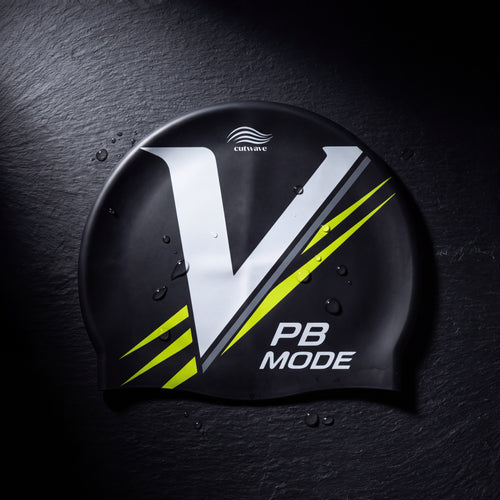


A dome swim cap is a rigid, seamless racing cap built to sit smooth with few or no wrinkles; a regular silicone cap is softer, easier to fit and the better all-round choice for lessons, training and recreational swimming. Choose a dome cap only when race-day hydrodynamics justify the firmer fit, extra fitting effort and often higher price.
The confusing part is that both can be made from silicone. “Dome” describes the shaped construction, not simply the material. A normal silicone cap stretches around your head and may crease. A dome cap is moulded to hold a rounded profile. Here is the practical difference, without pretending specialised race kit is automatically better for every swimmer.
Dome cap vs regular silicone cap at a glance
| Question | Dome racing cap | Regular silicone cap |
|---|---|---|
| Shape | Moulded, rigid and usually seamless | Flexible and shaped by your head |
| Main use | Races, time trials and serious race preparation | Lessons, lap training, club sessions and casual swimming |
| Fit | Very close and less forgiving | Stretchy and easier to adjust |
| Wrinkles | Designed to minimise them | Some creasing is normal |
| Putting it on | Needs careful positioning; often easier with help | Usually quick with the two-hand method |
| Best value for | Swimmers chasing small race-day equipment gains | Almost everyone who needs one cap for regular use |
If your week is mostly training, a regular cap is not the “beginner” version. It is simply the versatile tool. Browse CutWave’s regular silicone swim caps if that is the job you need done.
What is a dome swim cap?
A dome cap—sometimes sold as a moulded, 3D or helmet-style racing cap—is formed into a rounded shape before it reaches your head. The construction is firmer than a conventional stretch cap, and many models remove or reposition seams so the outer surface stays smooth. The label is not a universal standard, so check the individual model rather than assuming every “racing cap” has the same construction.
Arena’s guide to types of swimming caps describes moulded caps as dome-shaped race options intended to prevent wrinkles. Speedo likewise lists its Fastskin Hiro cap as a tight-fitting moulded design for racing. Those are manufacturer descriptions, not promises that buying one removes time from your personal best.
The purpose is straightforward: present a more controlled surface at the front of the swimmer during starts, push-offs and gliding. The trade-off is an intentionally close fit. A dome cap can feel less forgiving around the forehead and may be awkward to position alone. Models can also come in actual sizes, unlike many one-size stretch caps, so guessing is a bad fitting strategy.
What is a regular silicone cap?
A regular silicone cap is the familiar flexible cap used at lessons, lane sessions and club training. It stretches over the head, contains loose hair and gives goggles a stable surface. It may show a centre crease when laid flat and small wrinkles when worn. Neither makes it defective.
For most swimmers, that flexibility is useful. You can put the cap on without a pre-race assistant, adjust the edge between sets and use the same cap for easy laps, hard training and an occasional meet. Our swim cap material comparison explains why silicone is a practical default when you want a smooth, reusable training cap rather than the thinnest or softest option.
A regular cap still needs the right technique. If it folds, rolls or traps a pocket of air, fix the fit instead of deciding you need a technical race cap. Use the seam and design to orient it, open it with both hands and lower it from forehead to nape. The full routine is in our guide to putting on a swim cap.
Does a dome cap actually reduce drag?
There is laboratory evidence that cap construction can change passive drag, but the result needs context. A 2013 study of 16 swimmers compared a Lycra cap, a conventional silicone cap and a rigid seamless silicone helmet cap at three towing speeds. The helmet cap produced 5–6.5% lower passive drag than the conventional silicone cap in that test. The authors linked the difference to its rigid, close shape and lack of wrinkles. Read the study abstract on PubMed.
That is not the same as saying every dome cap makes every swimmer 5–6.5% faster. The study measured passive drag while swimmers were towed in a controlled position; it did not measure race times, starts, turns, fatigue or a swimmer repeatedly adjusting an uncomfortable cap. Product shapes differ, and a poor fit can erase the tidy surface you bought it for. The honest conclusion is narrower: cap model can affect drag, and a rigid seamless cap may reduce it under controlled conditions.
For a swimmer deciding between caps, the scale of the decision matters. Technique, starts, turns, conditioning and a secure pair of goggles dominate ordinary training. A dome cap is the last-detail choice for a race setup, not a substitute for any of those.
Which cap should you choose?
Choose a dome cap when:
- You race seriously and want to control small equipment details.
- You can try the correct size and tolerate a firm, close fit.
- You will practise putting it on before the meet rather than debut it behind the blocks.
- You already have a regular cap for daily sessions, so the dome cap can stay race-specific.
Choose a regular silicone cap when:
- You need one cap for lessons, fitness swimming or frequent club training.
- Comfort, easy fitting and quick adjustments matter more than eliminating every wrinkle.
- You have long or textured hair and need some flexibility around the hair volume.
- You race occasionally but do not want separate specialist equipment.
- You want a cap with a visible design rather than a plain technical race profile.
Club swimmers can reasonably own both: regular silicone for the kilometres and a dome cap for selected races. That is the same logic behind keeping training goggles separate from a favourite racing pair. If you are still building the rest of the setup, our guide to choosing a cap for racing and club training gives the broader checklist.
How to use a dome cap without creating a race-day problem
- Check the size chart for that exact model. “Adult” is not enough when a cap is sold in multiple sizes.
- Test it in training. Wear it for starts, turns and a race-pace set. Pressure that feels harmless for thirty seconds can become distracting over a full event.
- Flatten the hair first. Keep the hair low and even. A high bun creates the lump the dome construction is trying to avoid.
- Position rather than yank. Use finger pads, not nails, and spread tension across both sides.
- Decide where the goggles go. Many racers put goggles over a first cap and add the race cap on top. Our guide to the double-cap method covers that setup and its trade-offs.
- Stop if the fit is painful. A smooth profile is not useful if the cap creates a headache or distracts you behind the blocks.
After racing, rinse the cap with fresh cool water, let it air-dry away from direct heat and store it without crushing the moulded shape. Follow the manufacturer’s instructions when they differ; a structured cap is exactly the wrong object to leave folded beneath wet towels for a week.
FAQ: dome and regular swim caps
Are dome swim caps only for professional swimmers?
No. Any swimmer can buy one, but the practical benefit is most relevant to competitors who care about race-day details. A regular silicone cap is simpler for lessons and everyday training.
Can you train in a dome swim cap?
Yes, and you should test one in training before racing. Most swimmers still use a regular cap for routine sessions because it is easier to fit, adjust and replace.
Do dome caps keep hair drier?
Not reliably. The rigid outer shape does not create a watertight seal at the forehead, ears or nape. Expect some water to reach your hair with either style.
Do you need two caps with a dome cap?
No. Some racers use a first cap, goggles and then a dome cap to hold the strap between layers, but one correctly fitted cap is enough for normal training and many races.
Is a wrinkled regular cap fitted incorrectly?
Not necessarily. Small wrinkles are normal on a flexible cap. Refit it if there are large folds, trapped air, rolling edges or movement during push-offs.