


You have to wear a swim cap when your race, federation, venue or team rules require one; there is no single cap rule that covers every pool meet, open-water swim and triathlon. Check the current athlete guide, meet conditions and team instructions before race day.
The useful question is not simply whether competitive swimmers usually wear caps. Most do. The useful question is who controls the rule at your event. For an ordinary pool meet, that may be the governing federation, meet organiser, facility and team. For an open-water race or triathlon, the athlete guide can specify an official cap colour, start-wave cap or numbered cap. The World Aquatics competition regulations, the relevant national rules and the event bulletin are the documents worth checking.
Pool, Open-Water and Triathlon Rules Are Not the Same
A pool competition takes place in controlled lanes with officials, timing and a published meet programme. A cap may be standard team kit without being described as compulsory in every generic swimming rule. Local conditions can still require it, and a club may expect swimmers to race in the approved team cap.
Open-water races use a different operating environment. Organisers need to manage waves, course safety and athlete identification, so the issued cap may have a specific colour or marking. Triathlon adds another rules layer: the swim is only one discipline, and the race organiser controls when the official cap is worn and where it goes after the swim. The IRONMAN competition-rules page links the current season's full rules, while the World Triathlon document library publishes its governing documents.
| Event type | What to expect | Document to check first |
|---|---|---|
| Local pool meet | A personal or team cap may be allowed; meet and club policies decide | Meet conditions and team briefing |
| Championship pool meet | Kit, branding and team requirements may be stricter | Current federation rules and event bulletin |
| Open-water swim | An issued high-visibility or wave-colour cap may be compulsory | Athlete guide and safety briefing |
| Triathlon | The organiser may require its issued cap for the swim leg | Race rules, athlete guide and briefing |
| Training race or club time trial | The coach or venue sets the practical rule | Coach and facility instructions |
How to Check Your Exact Race Requirement
- Identify the governing body. Do not assume a World Aquatics, national federation, school, university, masters, open-water or triathlon event uses identical kit rules.
- Read the current event documents. Search the athlete guide, meet conditions and event bulletin for “cap”, “headwear”, “swimwear”, “equipment” and “branding”. Use the current edition, not a screenshot from last season.
- Check the team instruction. A meet may allow several caps while your club requires its team cap. Ask the coach which cap belongs in the race bag.
- Confirm any issued-cap rule. At check-in, find out whether the organiser supplies a cap, whether its colour identifies your wave and whether it must be the visible outer cap.
- Ask an official before the start. If the written material is unclear, resolve it at registration or the technical briefing. The starting block is a poor help desk.
Keep a copy of the athlete guide on your phone, but note the cap rule on a paper checklist too. Race venues are remarkably good at turning mobile data and battery percentages into abstract concepts.
A worked example: checking an IRONMAN event
Start on the official IRONMAN competition-rules page, which currently identifies the 2026 rules as effective from 2 March 2026 and links the English rulebook. Open that rulebook, check the swim-equipment section, then open the athlete guide for your specific race and search for “cap”. Finally, confirm the instruction at registration or the briefing. This sequence matters because a global rulebook and an event guide answer different parts of the question; this article does not infer a universal cap mandate from either one.
Which Cap Should You Pack for a Pool Meet?
Pack the cap your team has approved, plus one permitted spare. If the meet does not prescribe a team cap, choose a familiar cap that you have already worn for starts, turns and a full session. Race day is not the moment to discover that a new cap presses on your temples or catches your hair.
- Primary race cap: the approved team or personal cap.
- Identical or approved spare: stored dry in a separate pocket.
- Warm-up cap: only if your team uses a different cap before racing.
- Goggles: pack a tested spare and know whether you wear the straps over, under or between caps.
- Small towel or dry pouch: keep used equipment away from the spare.
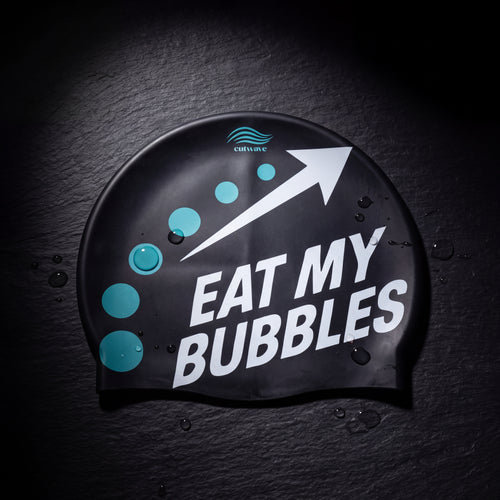
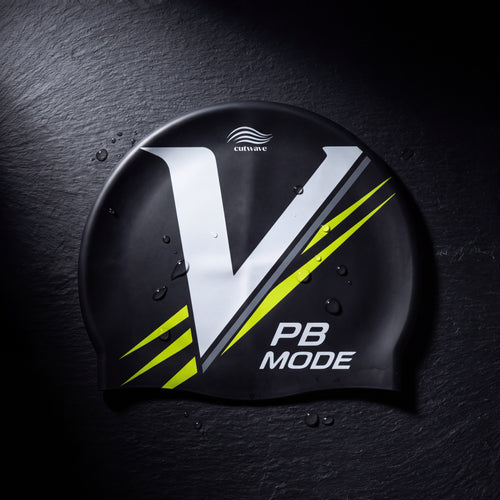
Our guide to choosing a cap for racing and club training covers the practical fit decision. Masters swimmers can also use the checklist in the masters swimming cap guide. If your event permits a personal silicone cap rather than prescribed team kit, browse the CutWave silicone cap collection; event and team rules still get the final word.
What Changes for Open Water and Triathlon?
Do not replace an issued event cap with your favourite training cap just because it fits better. The organiser may use colour to separate waves or help identify athletes on the course. If you want another cap underneath, confirm that layering is allowed and keep the issued cap as the visible outer layer when the rules require it.
For open water, start with the event's safety and kit instructions, then choose any permitted inner cap around the expected conditions. Our open-water cap guide explains visibility, fit and layering without pretending a standard silicone cap is thermal equipment. Triathletes should also read the pool-training versus race-day triathlon guide.
If you use the two-cap method, practise it before the event and check that the organiser's cap remains visible. The guide to why swimmers wear two caps explains the order. After exiting the water, follow the event's transition procedure; our guide on when to remove a triathlon swim cap covers the practical sequence.
What If Your Cap Comes Off During the Race?
First, do not invent a rule while you are racing. In a pool, continue safely unless an official directs otherwise. In open water, keep swimming safely and follow instructions from course personnel. Whether lost equipment creates a penalty, collection issue or no consequence depends on the event's rules and circumstances.
Reduce the chance of trouble before the race: use a cap you have tested, place hair evenly, seat the edge without folded ears and check the goggles without overtightening them. If a cap repeatedly moves in training, solve the fit problem before entering an event rather than hoping adrenaline has tailoring skills.
Five Race-Day Mistakes to Avoid
- Assuming “everyone wears one” means you know the rule. Habit and regulation are not the same thing.
- Ignoring the issued cap. Your own cap may be allowed underneath but not as a replacement.
- Using an untested cap. New kit creates preventable fit and handling problems.
- Bringing only one cap. A permitted spare prevents a small tear from becoming a frantic search.
- Copying another athlete. They may be in another wave, category or team, or simply wrong with impressive confidence.
FAQ: Swim Cap Rules for Races
Is a swim cap mandatory in a pool swimming race?
Not under one universal rule for every pool race. The governing federation, meet conditions, venue and team policy determine what applies. Read the current event documents and ask your coach or an official if anything is unclear.
Do I have to wear the cap given to me at an open-water race?
Often, yes, when the athlete guide identifies it as required equipment. It may show your wave or aid identification. Follow the organiser's instructions and ask whether another cap may be worn underneath.
Can I wear my own cap in a triathlon?
You may be able to wear it underneath, but the event-issued cap may have to remain the visible outer layer. Check the current race rules and athlete guide rather than assuming all triathlons use the same procedure.
Can I race without a cap if I have short hair or a bald head?
Hair length does not override an event rule. If the organiser or team requires a cap, wear it. If the event leaves caps optional, choose according to your tested kit routine.
Should I bring a spare swim cap to a meet?
Yes. Bring a spare that complies with the same team and event rules as your primary cap. Keep it dry and separate so it is ready if the first cap tears or goes missing.