

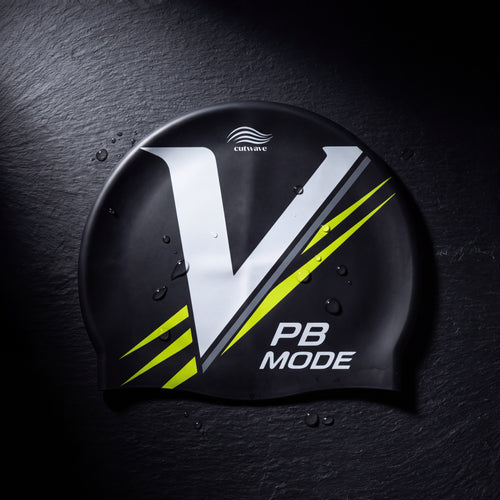


You usually do not need a swim cap for water aerobics unless your pool requires one, but a cap is useful if your class includes submersion, your hair falls into your face, or you want an easier post-class hair routine. In a gentle class where your head stays above water, going without one is often perfectly practical. Check the facility rules before your first session because local policy, not the exercise format, decides what is mandatory.
The useful question is not simply "cap or no cap?" It is how wet your head gets, what your hair needs, and whether a cap stays comfortable while you move. Unlike lap swimming, aqua aerobics involves upright movement, repeated arm work and plenty of splashing, but often little continuous head-first swimming.
When a swim cap is useful in water aerobics
A cap earns its place when it solves a real problem during your class. It can hold loose hair away from your eyes, face and neck while you jump, turn and lift your arms. That matters even when your head is mostly above water: wet strands can still stick to your face or catch under a hand during fast movements.
It also helps when the instructor includes brief underwater work, floating drills or a deep-water section. A cap contains your hair and makes the transition between upright exercise and swimming less distracting. It does not create a watertight seal. Water can enter around the edge, particularly when you submerge or adjust the cap.
- Wear one if long or loose hair interrupts movement, your head goes underwater, the class ends with swimming, or the facility requires it.
- Consider one if splashing leaves your hair heavily soaked and you prefer to keep it contained.
- Skip it if your head stays dry, your hair is secure, the pool has no cap rule and the cap creates more discomfort than benefit.
If your main concern is exposure to pool water, read the honest guide to what swim caps can and cannot do around chlorine. A cap can reduce direct contact for some hair, but it does not replace rinsing after class.
Use this decision rule before your first class
- Check the pool rules. Look at the class page or ask reception whether caps are required. Do not assume every facility follows the same policy.
- Ask whether your head will submerge. Shallow-water mobility classes may keep it above water. Deep-water aqua fitness, interval sessions and mixed classes may include more splashing or optional swimming.
- Secure your hair without the cap. If a soft tie keeps it clear and comfortable, a cap may add little. Avoid sharp clips beneath a cap because hard edges can press against your head or damage the material.
- Try one full session. A cap that feels fine for five minutes may become annoying through forty-five minutes of upright movement. Judge comfort, stability and whether it actually improves the session.
This activity-specific test is more useful than copying lap swimmers. For a broader cost-and-benefit decision, see when a swim cap is worth wearing.
Choose comfort over racing features
Water aerobics does not normally require a low-profile racing setup. Prioritize a cap that contains your hair, stays put through repeated movement and does not create pressure around your forehead or ears. Silicone is smooth, stretchy and easy to rinse; fabric caps can feel softer and allow more water through. The full swim-cap material comparison explains those trade-offs without pretending one material suits everybody.
| Your class or priority | Practical choice | Why |
|---|---|---|
| Head remains above water | No cap or a comfortable fabric cap | Hair control may matter more than a close swimming fit |
| Heavy splashing or brief submersion | Silicone swim cap | A close fit contains hair during more active movement |
| Long, curly or high-volume hair | Roomy cap sized for the hairstyle | Forcing too much hair into a small cap creates pressure and instability |
| Sensitive to pressure | Test fit before class and avoid undersizing | Tighter is not automatically more secure or more comfortable |
| Pool requires a cap | Any permitted style that fits securely | The facility rule comes first |
CutWave's silicone swim cap collection is one option when you want a close-fitting cap for classes that include splashing or submersion. Choose it for hair control and fit, not because any ordinary cap can promise dry hair.
Fit the cap for upright movement
Tuck in loose hair before stretching the cap over your head, then smooth the edge rather than repeatedly pulling one spot. The cap should feel secure without creating a headache. If it rolls upward as soon as you raise your arms or turn your head, first check trapped hair, conditioner or a folded edge; do not automatically size down.
For long hair, place it in a low, compact shape rather than a high bun that gives the cap a ramp to slide over. If you wear glasses on the pool deck, remove them before pulling the cap on so the arms do not become trapped. Put them back on afterward if your class allows them. If you use hearing devices, follow the device manufacturer's water guidance; a swim cap is not a waterproof enclosure for electronics.
Ear coverage is optional and comfort-led. Pulling the edge partly over the ears may help hold earplugs in place, but a standard cap does not reliably stop water entering the ear canal. The guide on swim caps, ear coverage and earplugs covers that question in detail.
What to pack for an aqua aerobics class
Do not turn a simple class into an expedition. Bring what the facility requires and what keeps the session comfortable:
- supportive swimwear that stays in place during jumps and arm movements;
- a towel and dry clothes;
- poolside footwear if the facility permits or recommends it;
- a water bottle for breaks;
- a swim cap if required or useful for your hair;
- a soft hair tie as a backup;
- goggles only if the class includes submersion or swimming;
- any class-specific equipment the instructor requests rather than buying gear blindly.
After class, rinse the cap in fresh water and let it air-dry away from direct heat. Rinse your hair as well if it got wet. Packing the cap while damp encourages odour and makes the next session less pleasant, which is a spectacularly avoidable own goal.
FAQ about swim caps for water aerobics
Are swim caps required for water aerobics?
Not universally. Many classes make them optional, while some pools require caps for everyone using the water. Check the facility's rules before attending.
Will a swim cap keep my hair dry during aqua aerobics?
No ordinary swim cap guarantees dry hair. It may reduce splashing and contain hair, but water can enter around the edge, especially during submersion.
What type of swim cap is best for water aerobics?
Choose for comfort and the amount of submersion. A silicone cap suits active, splash-heavy classes; a fabric cap can feel softer when the head mostly stays above water.
Should I wear goggles for water aerobics?
Usually only if the class includes underwater work, swimming or enough splashing to bother your eyes. Ask the instructor what the session involves.
Can I wear a swim cap over long or curly hair?
Yes, if the cap has enough room for your hair without painful compression. Keep the hairstyle low and compact, and do not force a standard cap over a bulky high bun.