


In a pool, a cap is mostly about hair, drag and the lifeguard's rules. In open water it has a more serious job: it is often the only part of you that anyone on the shore, in a kayak or on a support boat can see. From water level a swimmer is a small dot among waves, glare and chop, and the colour on top of that dot decides whether a spotter finds you in two seconds or loses you altogether.
The best swim cap for open water swimming is a snug silicone cap in a bright, high-visibility colour such as fluorescent orange, yellow, lime or pink. Silicone fits close, copes with lake and sea water, and holds goggle straps in place. When the water turns cold, add a second cap or switch to a neoprene cap underneath. And whatever is on your head, pair it with a tow float and swim with other people, because no cap makes open water safe on its own.
Visibility: why colour matters more than anything else
Dark caps in black, navy or bottle green blend into dark lake water and shadowed waves. White looks bright on the beach but can vanish into whitecaps and sun glare. The shades that stand out in most conditions are fluorescent orange, yellow, lime and pink, which is exactly why event organisers hand out caps in those colours.
A quick self-test before your first swim at a new spot: ask a friend to stay on the bank while you swim 50 metres out and back, then ask how often they lost sight of you. It is a sobering exercise the first time, and it tends to settle the colour question for good.
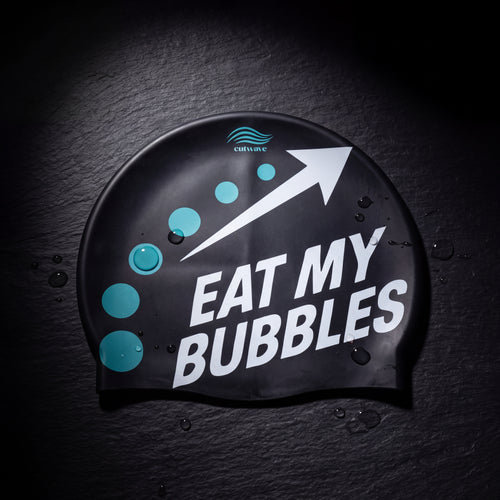
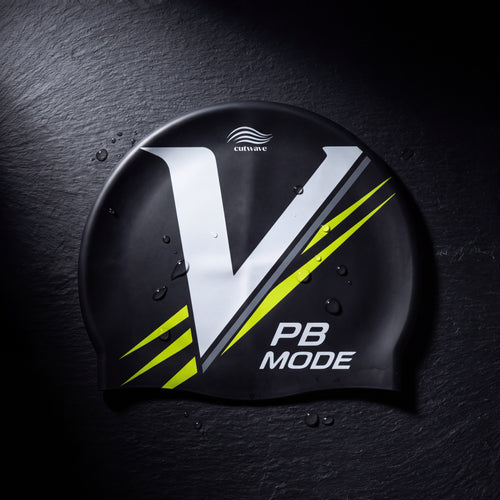
A straight word about our own caps: every CutWave design is printed on a black silicone base. That works well for pool training and lane banter, and badly for being spotted in a grey lake. For open water, put a bright cap on top. Plenty of swimmers wear their favourite cap as the first layer and a high-visibility cap over it, which also adds a little warmth and locks the goggle straps in place.
Silicone, latex or neoprene for open water
Most open water swimmers own at least two of these, because each one covers a different part of the season.
| Material | Best for | Watch out for |
|---|---|---|
| Silicone | Training and most summer swims. Fits close, grips goggle straps, easy to rinse. | Not insulation. A single cap feels thin once the water is properly cold. |
| Latex | Event caps and a cheap bright outer layer. | Thinner, tends to grab and pull hair, tears more easily, and some people react to latex. |
| Neoprene | Cold lakes and sea swims in spring, autumn and winter. | Bulkier, often has a chin strap, and not every event allows it. |
For the full material comparison, including Lycra, see our silicone swim cap material guide.
Fit: a cap that stays on through sighting and chop
Open water is harder on fit than the pool. You lift your head to sight, turn away from waves to breathe and may swim for an hour without touching a wall. A cap that creeps up lets cold water in at the back of the neck and drags the goggle straps with it.
- Choose the right size, not the tightest one. A cap that pinches gives you a headache long before the first buoy. Our swim cap size guide explains how to measure.
- Put goggle straps under the outer cap if you wear two. Straps trapped between two caps are much harder to knock loose in a crowded start. The method is in our guide to wearing goggles over or under a swim cap.
- Tuck long hair in fully, especially at the nape. A ponytail bulge levers the cap upward every time you lift your head to sight.
- Pull the cap well down over your ears. It will not seal them, but covered ears are far more comfortable in cold water. More on that in whether swim caps keep water out of your ears.
Warmth: when one cap is not enough
A silicone cap slows the flow of water over your scalp, so your head feels less cold, but it is not a thermal layer. Our guide on whether swim caps keep your head warm explains how much difference to expect. As a rough pattern from experience:
- Warm summer water: one silicone cap is plenty.
- Cool water, where your face aches for the first few minutes: two caps. The double-cap trick is cheap and surprisingly effective.
- Cold water, where the chill on your forehead is genuinely painful: a neoprene cap, with a bright silicone cap over the top so you can still be seen.
Tolerance varies enormously between swimmers and from week to week. Build up gradually and treat the cap as comfort kit, not protection.
Event and race rules
At most organised swims and triathlons you must wear the cap the organisers give you, usually a bright, numbered one. It goes on as the outer layer so marshals and safety crews can identify you in the water. Many events allow your own cap underneath, and a lot of swimmers prefer that setup: familiar silicone cap first, goggles on, event cap over the straps. Some events restrict neoprene caps or ban anything worn over the issued cap, so read the athlete briefing instead of guessing on the morning. Triathletes will find more on race-day kit in our triathlon swim cap guide.
If you want a comfortable base layer for the pool weeks and the under-cap slot on race day, our silicone swim caps do that job well. Just keep a bright cap on top whenever you leave the lane ropes behind.
Safety basics that matter more than any cap
- Swim with others. A buddy, a club session or a lifeguarded area. Agree a simple signal for "I'm stopping" before you set off.
- Use a tow float. A bright inflatable float clipped round your waist trails behind you and makes you far easier to spot. You can hold on to it for a breather, but it is a visibility aid, not a lifesaving device.
- Tell someone onshore where you are going in, where you plan to get out and when you expect to be back.
- Swim parallel to the shore in new water rather than straight out. Check currents, tides, boat traffic and local rules first.
- Get out early if you start shivering hard, your hands turn clumsy or your thinking feels foggy. Cold creeps up faster than most people expect.
Care after lake, river and sea swims
Rinse the cap inside and out with fresh water as soon as you can, especially after salt water, then dry it flat away from direct sun and heat. Peel a double-cap setup apart before drying, because two caps stuck together stay damp for hours. Keep it away from wetsuit zips and anything sharp in your bag. The full routine is in our guide to cleaning and storing a silicone swim cap.
Related guide: the water polo cap rules explained
Related guide: the cap removal routine after the swim
Related guide: cap requirements for open water events
FAQ
Do I need a swim cap for open water if I have short hair?
Yes, if only for visibility. Short hair does not need containing, but a bright cap is the cheapest piece of safety kit you can own, and it takes the edge off cold water on your scalp.
Is it safe to swim alone if I wear a bright cap and a tow float?
No. Bright kit helps people find you only if someone is watching. Swim with a partner or a group, or at a venue with lifeguards, and tell someone onshore your plan.
Can I wear a neoprene cap and a silicone cap together?
Yes, and many cold-water swimmers do. The neoprene cap goes on first for warmth, with a bright silicone cap on top for visibility. Check event rules before racing in neoprene.
Do I need a different cap for sea swimming than for a lake?
No. The same silicone cap works in both. Salt water is the main difference, so rinse the cap in fresh water after every sea swim and dry it away from the sun.