


Yes, in most cases you still need a swim cap with short hair or a bald head: pools that require caps apply the rule to every swimmer, and outdoors a cap covers your scalp from sun and cold. Where there is no rule and you are swimming easy lengths indoors, it is genuinely optional.
The real difference for a cropped or hairless head is fit. With no hair to grip, the cap holds on with its edge and nothing else, so size and technique matter more than they do for a swimmer tucking in a ponytail.
What a cap does when there is no hair to hold
- It meets the pool rule. Cap rules are about hair shedding into the water and heads being easy to spot, and most pools apply them to everyone. The guide on why swimming pools require swim caps explains the reasoning.
- It covers your scalp outdoors. In front crawl the crown of your head sits at the surface for the whole session, and a bald scalp is one of the first places to burn at an outdoor pool or a summer lake. Whatever the cap covers is skin you do not have to think about.
- It cuts heat loss. A cap slows the flow of fresh cold water over your head, which you notice in a cool pool and even more in open water. More in do swim caps keep your head warm.
- It makes you visible. A bright cap is far easier to spot than skin in open water or a crowded lane.
- It reduces chlorine on your scalp. Water still gets under the edge, but less of it washes across your skin while you swim. Rinse your head afterwards either way.
What a cap will not do is make a noticeable difference to your speed in training. Racers can argue about caps versus freshly shaved heads; lane swimmers have the pace clock to worry about.
Short hair, stubble or bald: how the fit changes
Cropped hair and a smooth scalp behave differently under silicone, so it helps to know which one you are working with.
| Your head | How a cap behaves | What helps |
|---|---|---|
| Short hair, a few centimetres long | Grips well and sits evenly | A normal snug fit; wet or dry hair, whichever goes on more easily |
| Buzz cut or stubble | Grips well, but can drag on stubble coming off | Peel it off from the forehead backwards instead of pulling from the top |
| Fully shaved or bald | Has only skin to hold, so it can creep up on push-offs and turns | A dry scalp, a snug size and nothing greasy under the edge |
| Thinning on top, longer at the sides | Holds at the sides, loose at the crown | Pull the cap low at the back so the edge sits on hair |
How to keep a cap on a smooth scalp
- Start dry. Most bald swimmers find silicone grips a dry scalp better than a wet one. If you have just showered, towel your head and wipe the inside of the cap before it goes on.
- Keep grease off the edge. Moisturiser, scalp oil and anything shiny turn the edge into a sledge. Put them on after the swim, or at least well before it.
- Choose snug, not roomy. A cap cut with space for a bun has nothing to fill it on a shaved head, so it wrinkles and lifts. Snug without pressure is the target, and the swim cap size guide shows how to check.
- Anchor it low at the back. Pull the back edge down past the bony bump at the back of your skull, then settle the front on your forehead. A cap anchored low behind has far less room to ride up. The step-by-step guide to putting on a swim cap shows the two-handed method.
- Test it. Swim four lengths with a couple of tumble turns, then run a finger along the front edge at the wall. If it has climbed more than a finger's width, the fit or the grip is the problem, not your turns.
If it still creeps after all that, work through why a swim cap keeps slipping and what helps. The usual culprits are a cap that is too big, a cap that has lost its stretch, or a scalp that is too slick.
Silicone, latex or fabric on a bald head
Silicone is the comfortable default for a smooth scalp: it stretches evenly, lies flat on skin and holds a little warmth. Latex is thinner and cheaper; it grips skin hard, which some swimmers like and others find pinchy, and it tends to tear sooner. Fabric caps are soft and easy to pull on, but on a hairless head they sit loosely, lift easily and let water straight through, so they do little for warmth. The silicone swim cap guide compares all three in detail.
A snug silicone cap pulled over the ears also holds ear plugs in place, though it does not seal your ears on its own. The guide to whether swim caps keep water out of your ears explains that combination.
When you can leave the cap in the bag
- Skip it: indoor pool, no cap rule, relaxed lengths, and you do not mind a little more chlorine on your scalp. Rinse your head afterwards.
- Wear it: any pool with a cap rule, outdoor pools on a bright day, cool water, open water, club sessions and races, where organisers usually hand out a cap anyway.
- Children with short hair: follow the lesson or club rules. A bright cap also makes it easier for the teacher to count heads.
- A sore, broken or sensitive scalp: if you have a skin condition or a healing wound on your head, ask a doctor or pharmacist whether chlorinated water and a cap are fine for now.
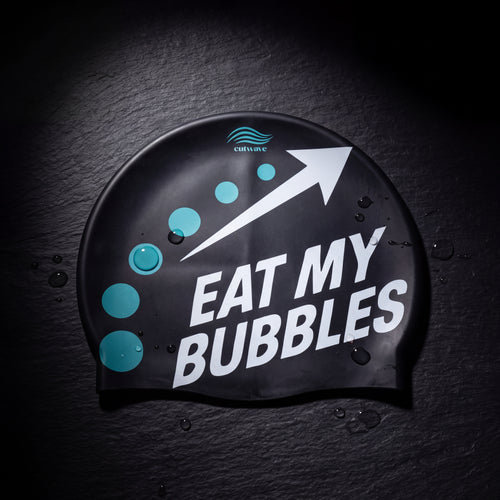
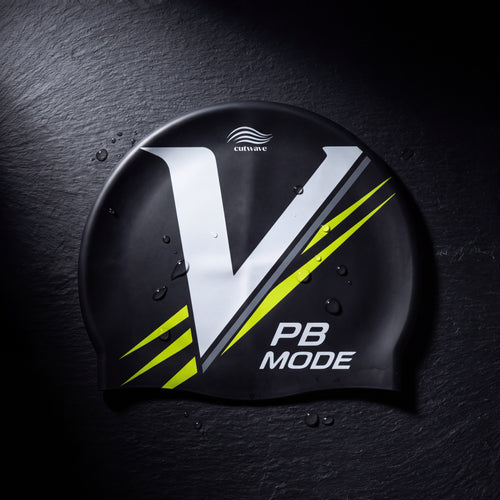
If you are picking your first cap, every CutWave cap is 100% premium silicone and designed in Austria, and a bright printed design on a shaved head is hard to miss in any lane. Browse the CutWave swim cap collection.
FAQ
Is it fine to shave my head right before a swim?
It is, but many swimmers find freshly shaved skin stings in chlorinated water. Shaving the evening before gives the skin time to settle, and the cap then sits on a smooth, calm scalp.
Should I wear sunscreen under a swim cap?
The cap covers most of your scalp, so put your effort into the skin it leaves exposed: forehead, ears and the back of your neck. Use a water-resistant sunscreen, let it soak in first, and keep it off the strip where the cap edge sits.
What size swim cap do I need with no hair?
Usually a standard adult cap. Hair volume is what pushes people towards larger caps, so without it the snug end of the range tends to fit best. Measure around your head at the forehead and compare it with the size guide before you buy.
Do goggles go over or under the cap on a bald head?
Both work. Straps under the cap sit on bare skin and hold well, while straps over the cap help pin down a cap that likes to creep. Try each for a session; the guide to wearing goggles over or under a swim cap covers racing too.